Anti-gravity and artificial gravity are different things, usually.
Anti-gravity -- as in, some force that works opposite to gravity, making a dipolar system of gravity -- hasn't been seen to exist and probably doesn't, except for dark energy/dark matter which seems to repel objects rather than attract them.
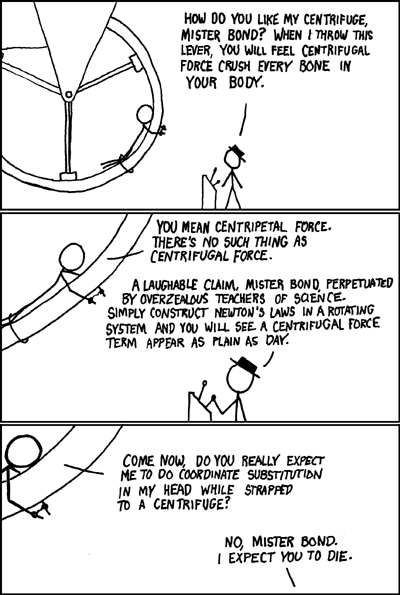
Artificial gravity, or induced g, is a mechanical process of centripetal force. Similar to water in a bucket being swung in a circle, if you spin a cylinder in space the same will happen to objects inside. A complex rotation (2 or 3 axial rotation) will produce an inconsistent force, so it would be a single axle (like a spinning top, or the swinging bucket).
The size of the rotating body isn't a major problem -- the force will exist that replicates gravity -- until you have a very large structure with high mass. The more mass, the more difficult it will be to hold it together under the force of the rotation. Spin a CD fast enough and it flies apart:
http://www.youtube.com/watch?v=Hc3KlEZ2uds&feature=related
It's really light, so it needs a lot of speed to get it to fly apart. Mass, and major structural integrity issues get to be problems.