Reading Verne's Voyages Extraordinaires

(37) Le Château des Carpathes (The Carpathian Castle, aka The Castle in Transylvania, 1892) (1 volume) 52K words


For the 37th Extraordinary Voyage, Verne changes tack and gives us a Gothic novel. The story takes place in Transylvania, at a little town and its neighbouring abandoned castle in the Carpathian Mountains. Dracula was published five years after this novel, and some say that Verne's novel probably was one of Bram Stoker's influences. There are some coincidences in setting and premise, but they are otherwise different. Of course, Verne did not invent the genre nor the stories about Vlad Tepes that inspired Stoker.


First read or reread?: First read for me.


What is it about?: Mysterious things are occurring in an abandoned castle located near the village of Werst in the Carpathian Mountains of Transylvania, Romania. The villagers are convinced that the Chort (devil) occupies the castle, particularly after a pair of them venture near the fortification and return injured and terrified. Count Franz de Télek, a traveller visiting the region, decides to investigate the disturbances for himself when he is informed that the owner of the castle is Baron Rodolphe de Gortz. Years earlier the Baron was the Count's rival for the affections of the celebrated Italian prima donna La Stilla.


This is a rather atypical novel within the Extraordinary Voyages. I would call it a Gothic novel, rather than terror, but with a Vernian touch. When this author tried a romantic story ("The Green Ray") I felt that he was not playing to his strengths and, to a lesser extent, that's the case here too.

I thought the first part of the novel, concentrating on the villagers and their fears and investigations, was well-done. He depicts the characters with their foibles and small-mindedness, but sympathetically. The character of Patak, the self-styled "doctor" of the village, provides the comic relief, with his big mouth and his lack of bravery. Perhaps these villagers are a bit more rational than the story demanded, but I guess Verne can't help being rational.

The backstory involving Count Franz de Télek, Baron Rodolphe de Gortz, and their romantic rivalry is also intriguing, and suitably melodramatic.

The resolution, as I said, is very Vernian in style, although closer to the rational Gothic style of Ann Radcliffe than to the violently horrifying Matthew Lewis.

Where the novel is not so successful is when it comes to the action part, which is a bit underwhelming. Also, Verne is not as skilled as some of the writers specialized in the Gothic genre at creating a feeling of oppression with their language and descriptions. I felt that, despite the psychological suffering of one of the main characters, Verne did not depict that as vividly as he did in some of his novels.

Despite these flaws, the novel, which is quite short, is also quite readable, and Verne's style and flair for entertaining the reader is very much present.


Enjoyment factor: I enjoyed it, although I was a slightly disappointed because this is among the most popular novels in the second half of Verne's career (although not among his most popular overall), and I felt it's a pleasant but minor work. One thing going for it is its originality within Verne's body of work. I'm glad he tried this so that we could see a different side of his storytelling abilities.


Next up: Claudius Bombarnac, aka The Adventures of a Special Correspondent
 
Last edited:
I'd personally regard that as good! I've been meaning to read some Radcliffe but not Matthew Lewis.
I am actually trying to read both (Udolpho and Monk), but I am struggling with both as Radcliffe is slow and atmospheric, while Lewis is dramatic and intense. Either way, each style is interesting but I really have to be in the mood. Eventually I will finish them both.

That said, I did enjoy The Carpathian Castle. With these old SF novels I try to read them with the period they were written in my mind. I didn't know it is popular but I can understand why.
 
as Radcliffe is slow and atmospheric, while Lewis is dramatic and intense.

When I said this Verne novel is closer to Radcliffe I meant in rational disposition vs horrifying and truculent, but Verne's plots are never slow and he is not as good when it comes to atmospheric.

Yeah, The Carpathian Castle is relatively popular, emphasis on "relatively". It's one of the most popular novels from the second half of Verne's career, but that's still far from the really well-known ones. I haven't really wanted to discuss much about the resolution to avoid spoilers.

This is the first time I have read it but I definitely had heard of it several times, while some of the Verne novels written in this period (like the one I'm reading right now, Claudius Bombarnac) I didn't even know that they existed before I got the complete list.
 
Last edited:
(38) Claudius Bombarnac (Claudius Bombarnac, aka The Adventures of a Special Correspondent, 1892) (1 volume) 70K words


The 38th Extraordinary Voyage takes us back to Asia, crossing the whole length of that continent like we had done in "Michael Strogoff: The Courier of the Czar", although that was more to the north through Siberia, and also in "Cesar Cascabel", which took place even further north near the arctic circle. This time we go through the Russian Turkestan and China. The complete trip is done by train, which is a first, although that means of transportation had been used extensively in "Around the World in Eighty Days".


First read or reread?: First read for me.


What is it about?: Claudius Bombarnac, a reporter, is assigned by a French newspaper to cover the travels of the recently inaugurated Grand Transasiatic Railway which runs between Uzun Ada, by the coast of the Caspian Sea, to Peking, China, by the coast of the Pacific Ocean. Accompanying him on this journey is an interesting collection of characters, including one who is trying to beat the round the world record and another who is a stowaway hidden within the luggage. Claudius hopes one of them will become the hero of his piece, so his story won't be just a boring travelogue. He is not disappointed when a special car guarded by troops is added to the train, said to be carrying the remains of a great Mandarin. Before the journey is over, Claudius will find his hero.


So this is another travel story. As always with Verne's books, I enjoy following the characters' progress on the map provided.

During Verne's life, the world was getting smaller. The unexplored regions were shrinking and public transportation was improving. This was reflected in "Around the World in Eighty Days", where a trip that until then would have been much longer and difficult is done using public transportation, placing it within the reach of tourists rather than explorers or adventurers. From that book, progress continued, and here Verne's characters travel using a newly inaugurated railroad line that had not existed at the time of Phileas Fogg's travel around the world. In fact, in real life, several travelers inspired by Verne's story had comfortably bested the eighty days deadline. Here, one of Claudius Bombarnac's travel mates is a caricature of Phileas Fogg, a bad-tempered German baron who is attempting to break the record for a trip around the world.

The trouble with having the whole journey done by train is that this fits better a travelogue than an adventure story. And in fact, between the first half and the first two thirds of the novel feel like a travelogue. The story is told in the first person by the titular character, a reporter. He addresses the reader in a very colloquial manner, reminding me in that sense of "The Flight to France". We are given the character's impressions about his travel mates and the incidents of the trip, along with descriptions of the landscape and the cities where they make stops. The saving grace here is that the first person narrative is quite readable and Claudius' travel mates are a colorful bunch, but some readers will be bored by these descriptions.

Since this is still a Verne novel, things do speed up eventually and, by the time the trip finishes, the characters have gone through an adventure and Claudius Bombarnac has found the hero for his story.

The novel will work better for readers who appreciate a travelogue and who are entertained by the social satire and the contrasting characters of the travelers. I was amused by how Verne's national prejudices are reflected in the way the characters are depicted. Verne liked the Russians, and Major Noltitz, an experienced Russian army doctor, is an agreeable companion. The same can't be said of Sir Francis Trevellyan, one of the British representatives, who is a superscilious snob who barely deigns to exchange a word with his companions. Or about Baron Weissschnitzerdörfer, the irascible German whose list of travels is longer than his name and who is used as the comic relief of the story. We have Fulk Ephrinell, the American sales broker who has a rather unromantic romance with Mrs. Horacia Bluett, a British businesswoman with a similarly practical way of thinking; Kinko, the young Romanian stowaway who travels hidden within a luggage box because he has no money but hopes to reunite with his girlfriend who works as a milliner in Peking; Adolphe and Caroline Caterna, a happily married couple of French actors who reminded me of Mr. and Mrs. Cascabel from "Cesar Cascabel"; Pan-Chao, the young and fun-loving Chinese student who is returning home accompanied by his sedate and elderly chaperone; Popof, the Russian train conductor who is the only member of the staff who will make the whole trip with the travelers; Faruskiar, a proud and enigmatic Mongol lord...


Enjoyment factor: I enjoyed it, but I found the first part a bit uneventful, particularly when it came to describing the cities where they stop. Because of that, it's not the Verne book I would recommend to someone who is not already a fan of the writer. However, Verne can be relied on to include a good adventure story, even when it takes it a while to get moving. Even during the slow part, I just like the way he tells a story, and the idiosyncratic characters worked for me. It was interesting traveling through this part of the world, seeing it from the eyes of a 19th century writer.


Next up: Foundling Mick
 
Last edited:
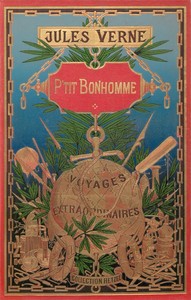
(39) P’tit-Bonhomme (Foundling Mick, 1893) (2 volumes) 110K words


The 39th Extraordinary Voyage takes us to Ireland. It's the only book in the series taking place there, although the plight of Irish people will also be a theme in "The Kip Brothers". "Foundling Mick" is the third out of four Verne novels with children as the main characters, the others being "Dick Sand, A Captain at Fifteen", "Two Years' Vacation" and "Travel Scholarships". This one is inspired by British social novels like Dickens' "Oliver Twist". Verne did homages like that in several of his novels: "Godfrey Morgan" is a parody of Daniel Defoe's "Robinson Crusoe", "Mathias Sandorf" is inspired by Alexandre Dumas' "The Count of Monte Cristo", and two later Verne novels, "An Antarctic Mystery" and "The Castaways of the Flag" are sequels, respectively, to Edgar Allan Poe's "The Narrative of Arthur Gordon Pym of Nantucket" and Johann David Wyss' "The Swiss Family Robinson".


First read or reread?: First read for me.


What is it about?: Foundling Mick is an orphan growing up in Ireland. Overcoming misery, hunger and a number of obstacles, Foundling Mick and another orphan whose life he had saved, start a small business that proves profitable. Seeking larger opportunities, they move to Dublin, where Foundling Mick hopes to make his fortune and use it to help the good people who helped him along the way.


This is another atypical novel within Verne's body of work. Instead of being a story of travel and adventure, or a science fiction tale, this is about the life of a young orphan growing up in impoverished Ireland.

The story is inspired by the tradition of British social novels, particularly Charles Dickens, whose work Verne admired (he once said that he had read all of Dickens’ work 10-times over). Another possible influence is the "rags to riches" stories of Horatio Alger Jr.

The depiction of the poverty, misery and privations that the main character and many other people in Ireland went through is quite vivid. Young orphans were mistreated and exploited, or cared for in "ragged schools" which often were not much better. We also witness the plight of the farmers, who didn't own the land and had to pay a rent to their British landlords, subject to eviction whenever they could not pay because of a bad harvest, and also the harsh conditions for those who worked in factories.

The main character, whose birth name, if he ever had it, is unknown, is called throughout the novel by his nickname. In the original French he is called P’tit-Bonhomme, which would translate literally to "Little Lad" or "Little Fellow", but in the Spanish translation I read he is called Hormiguita ("Little Ant").

Even though this is not a travel novel, the circumstances of the titular character's life take him to different parts of Ireland, which allows Verne to give a complete depiction of the island and some of its inhabitants. Verne is sympathetic towards the Irish people's desire for independence, depicting how foreign landlords who rarely set foot in Ireland took the fruits of the work of Irish farmers.

Some parts of the novel are quite bleak, but there also better, more hopeful moments, particularly in the later part of the novel, when the orphan's good head for business starts to pay off.

I felt that at the beginning of the novel, the main character was too precocious for his tender age. Granted that under those circumstances children are forced to grow up fast, but I felt it was a bit too much to be realistic. Fortunately, that annoyance disappeared soon once the main character got a little older. He was still a precocious child, but to a more believable extent.

One thing that caught my attention reading this novel, and other novels of this kind like "Oliver Twist", is how attitudes towards poverty and crime have changed. The main characters of these 19th century novels, although they live in poverty and suffer hunger, are depicted as having an innate moral instinct that keeps them from stealing or other forms of dishonesty, which separates them from most of the people around them. Possibly if the character stole, he would not be considered worth cheering for, while in modern novels we tend to be much more understanding of how poverty may push good people towards petty crime.


Enjoyment factor: I was dubious at the beginning of the story, because I felt the main character was not believable, as he spoke and acted much older than his age. However that soon stopped being an issue once the character got slightly older, and I found myself enjoying the story. I liked the variety in the hero's adventures and misadventures, which kept the story dynamic and entertaining. When things started to get better, it was satisfactory because of how hard the path had been to get there.


Next up: Captain Antifer
 
Only some of Verne novels you review are on Project Gutenberg. I'd not heard of "Foundling Mike" and being technically an Irish Orphan*, I'm interested. It's in French on Gutenberg.
(All Verne on Gutenberg: https://www.gutenberg.org/ebooks/author/60?sort_order=title)

I found "Jules Verne: The Complete Novels" on Amazon titled as "Jules Verne: The Collection (20.000 Leagues Under the Sea, Journey to the Interior of the Earth, Around the World in 80 Days, The Mysterious Island...)"
It seems better condition than the reviews as it does have a proper TOC and while it might have OCR errors, it's certainly hugely better than the material on archive org.
85p on Amazon UK. I can put the link if wanted and allowed!

47 novels
Five Weeks in a Balloon​
The Adventures of Captain Hatteras​
Journey to the Interior of the Earth​
From the Earth to the Moon​
In Search of the Castaways​
Twenty-Thousand Leagues Under the Sea​
Around the Moon​
A Floating City​
The Adventures of Three Englishmen and Three Russians in South Africa​
The Fur Country​
Around the World in Eighty Days​
The Mysterious Island​
The Survivors of the Chancellor​
Michael Strogoff​
Hector Servadac​
The Underground City​
Dick Sand, A Captain at Fifteen​
The Five Hundred Millions of the Begum​
The Tribulations of a Chinaman in China​
The Steam House​
Eight Hundred Leagues on the Amazon​
Godfrey Morgan​
The Green Ray​
Kéraban the Inflexible​
The Star of the South​
The Archipelago on Fire​
Mathias Sandorf​
The Lottery Ticket​
Robur the Conqueror​
North Against South​
The Flight to France​
Two Years’ Vacation​
Family Without a Name​
The Purchase of the North Pole​
Caesar Cascabel​
Mistress Branican​
The Castle of the Carpathians​
Claudius Bombarnac​
Foundling Mick​
Captain Antifer​
Floating Island​
Facing the Flag​
Clovis Dardentor​
An Antarctic Mystery​
The Will of an Eccentric​
The Master of the World​
The Chase of the Golden Meteor​

(* Both my parents have died within the last year)

I've read maybe five Verne novels and I might not read all of these, but certainly my interest in many of them is quickened by the excellent reviews and summaries on this thread.

Thanks farseer2!
 
Only some of Verne novels you review are on Project Gutenberg.

Yes, a book being in the public domain does not automatically mean it's in Project Gutenberg. The Delphi Classics edition of Complete Works of Jules Verne, for example, has 47 of his novels in English (including Foundling Mick) and 16 in French, since there is no English translation in the public domain for those (all Verne novels have been translated to English, but not all are in the public domain). Maybe you are referring to that edition of his complete works, or maybe a similar one.

The public domain translations will not always be the best translation available, though (see the links at the end of the first post in this thread for details). I have tried to mention it in the review of the novel when I read that there's an English translation that's particularly infamous.

I'm actually reading them in Spanish, as I have a collection of his complete works in that language, so I cannot comment on the quality of the English translations first hand.

I'm glad you are enjoying my reviews. I'm enjoying the project more than I had expected. I remember why I used to love those books of his that I read as a teenager. When I started I didn't know if I'd complete it, but by now I have no doubt. I was worried that once I got past his most famous works I wouldn't enjoy the lesser-known ones, but that hasn't been the case. I guess I just enjoy his way of telling stories.

Here's a newspaper article about Foundling Mick:

I'm sorry about your parents, Ray.
 
Last edited:
The public domain translations will not always be the best translation available, though (see the links at the end of the first post in this thread for details). I have tried to mention it in the review of the novel when I read that there's an English translation that's particularly infamous.
I noted that.
Also I followed a discussion on translations of "War and Peace". Two people in the house are reading that and the PD ebook seems to be the same as my Penguin paperback (obviously even the translator is sufficiently dead), except it has translations of any French as notes after the paragraph (Marginalia like that works better on ebooks for any short note than a "footnote". maybe better on paper sometimes too!).

Thanks for news link. I've lived in Limerick for nearly 40 years.
When he was briefly taken into the care of an actress named Anna Watson in Limerick, Mick lodged in the Royal George Hotel and the actress starred in a play in the city’s Theatre Royal.
The Royal George Hotel is on it's 3rd re-incarnation, I think, but on the same site. Not sure where the Theatre Royal might have been.

My Dad was in his 90s and had put his affairs in order. My Mum was a few days off being 90. Both passed in their sleep.
 
Last edited:
(40) Mirifiques Aventures de Maître Antifer (Captain Antifer, 1894) (2 volumes) 99K words


The 40th Extraordinary Voyage takes us on a treasure hunt around the Middle East, Africa and Europe. The use of coordinates and other geographical clues that the characters are trying to follow is reminiscent of "In Search of the Castaways", although in that case the objective was finding people whose ship had been lost.


First read or reread?: First read for me.


What is it about?: Because of a noble deed committed by his father, Captain Antifer expects to someday receive the legacy of wealthy Egyptian, Kamylk Pasha, who his father helped many years before. To receive this legacy, first Antifer must await receiving the longitude that accompanies the latitude that he already possesses. It arrives in the form of Egyptian notary, Ben Omar (who must be present when the legacy is uncovered) and his "assistant" Nazim. Nazim is actually Saouk, son of Kamylk's treacherous cousin. He feels the legacy is rightly his and he only waits for the right time to steal it all. The Egyptians, along with Antifer, his nephew Juhel (who only desires to marry Antifer's niece Enogate) and family friend Tregomain journey to the Gulf of Oman to uncover the legacy. Unfortunately, the quest turns out to be longer and much more complicated than they had anticipated.


People do not generally think of Verne as a funny writer, but some of his novels have a comical streak or a touch of irony, while still being interesting as adventure stories. Novels like "From the Earth to the Moon", "Tribulations of a Chinaman in China" or "Godfrey Morgan" have that comedy element.

The humor in "Captain Antifer", however, reminded me of "Kéraban the Inflexible", because it's based on the explosive personality of a stubborn, irate, energetic, unreasonable main character. I found Antifer funnier than Kéraban, though, because the supporting cast here plays off against his personality to better effect. We do get the same kind of family members and friends who try to appease the stubborn hero, but we also get a bunch of villains and collaborators/rivals who are the perfect target for Antifer's wrath and biting remarks.

On the adventure side, this novel is less inspired. We get the typical Vernian travels and description of places, and the locations are exotic enough, but it feels as if we never get too far away from civilization, which makes it feel less adventurous. There are two reasons for that: one is that Western-style civilization had indeed grown during Verne's lifetime (he was 66 when he published this), and the other is that the locations visited are always by the sea, which makes them more reachable.

Don't get the idea that there's no adventure, though. There is, including both human obstacles and some typically Vernian unlikely behavior of wild animals. But this one is not among the most inspired Extraordinary Voyages in this sense. Of course, the fact that there is a lot of discussions and interaction between the characters doesn't help make it move faster, although it does make it funnier. I even laughed out loud (which is unusual for me when reading Verne) at the surrealistic meeting between the treasure hunters and the radical anti-wealth priest whose help they needed. Verne, of course, makes fun of both the extremist priest and the greedy treasure seekers.

The novel does feature some interesting twists at the end, including a weird final location which, to my surprise, turns out to be a real place, depicted accurately. Many of Verne's early novels have very nice twist endings, but you don't find them so often his later novels.


Enjoyment factor: I had fun reading this, but possibly it's one I would recommend to people who are already Verne fans, because some readers might get bored at the description of places when it's not accompanied by a fast-moving adventure. Or, at least, not as fast-moving as other Verne novels, which are never very long. I found the treasure hunt aspect rather interesting, though, and was eager to find out how it would all end.


Next up: Propeller Island, aka The Floating Island
 
(41) L'Île à hélice (Propeller Island, aka The Floating Island, 1895) (2 volumes) 109K words


The 41st Extraordinary Voyage takes us to Oceania on board a huge artificial, self-propelled island designed to travel the waters of the Pacific Ocean. We had been in Oceania in the last two volumes of "In Search of the Castaways" and in "Mistress Branican", but here we explore a new region: the multiple archipelagos of Melanesia and Polynesia. The theme of a sea voyage on a great ship had been treated in "A Floating City", but here Verne takes the concept further by introducing one of his marvellous vehicles. We also saw a community sharing a floating surface, in that case on a river journey, in "Eight Hundred Leagues on the Amazon".


First read or reread?: First read for me.


What is it about?: A French string quartet (Sébastien Zorn, Frascolin, Yvernes and Pinchinat), traveling from San Francisco to their next engagement in San Diego, is diverted to Standard Island. Standard Island is an immense man-made island designed to travel the waters of the Pacific Ocean. On the island there is a luxurious, futuristic city inhabited by millionaires. The quartet is hired to play a number of concerts for the residents during their tour of the islands (Sandwich, Cook, Society, etc.) of the South Pacific. Standard Island seems an idyllic paradise; however, it is a society divided in two. The left half's population is led by Jem Tankerdon and is known as the Larboardites. The right half's population is led by Nat Coverley and is known as the Starboardites. Despite the several obstacles and shared dangers encountered on their journey, the two parties maintain a disagreement that threatens the future of the island itself.


This novel has several interesting things to offer the reader. The first is another of those Verne science-fictional vehicles, which is something we had not had for a while in the Extraordinary Voyages. The last one was the flying machine in "Robur the Conqueror". In this case, we get the largest of these vehicles: an artificial island thrust by giant propellers. On the island there is a city that functions as an utopia, with some futuristic technology (futuristic for the time it was written, anyway), and able to do some long-range communications to rendezvous with supply ships. The residents, apart from the necessary workers, are millionaires who pay a large rent to the company that owns the island in exchange for a luxurious place to live with their families.

Verne had already explored the concept of an utopian city in "The Begum's Millions", but here the utopia is threatened not just by external enemies, but also by internal dissension. We see the slightly more pessimistic outlook that Verne had in the second half of his career, because this community of wealthy citizens, ideal on paper, is somewhat bored and aimless, divided by petty rivalries.

There's material here for an interesting story, but unfortunately Verne does not make very good use of it, at least initially. There is just too much exposition and too little action for large parts of the novel.

Our main characters are four outsiders, a group of French musicians who are initially touring the US as a string quartet. The four of them are good friends but have different personalities: we have the curmudgeon leader, the practical one, the poetic one and the jokester. They are taken onto the island (initially one could almost say kidnapped, although they are compensated generously) and that way the readers discover this technological marvel along with the characters. This leads to a lengthy description that we can forgive because the island is interesting, but maybe it goes on for too long. Then the story turns into a travelogue describing the different Pacific islands were our moving island makes stops in its journey. Our four heroes are always among the most interested in doing some tourism, and that way we get descriptions of the different locations and natives.

I have never been a fanatical adherent of the "show, don't tell" golden rule. In general it's reasonable advice, but there is a place for "telling" in a narration. Verne is famous for using his stories not just to entertain, but also to inform the reader, and that means telling. However, for a good part of this novel, I feel he forgets the "entertain" part. Even in a novel with a lot of informative asides, like "Twenty Thousand Leagues under the Seas", this is tempered by an interesting story. Here, not so much, at least during the first half of the novel, some parts of which I found dull.

This improves in the second half, where we have a lot of things going on, from an invasion of dangerous wild animals due to sabotage, to an attack by native pirates, from the kidnapping of one of the characters when exploring one of the islands to dangerous internal strife. Still, the first half may have been the dullest part of the Extraordinary Voyages so far.

Apparently, the public domain English translations are kind of infamous. The W. J. Gordon translation published as The Floating Island censored multiple passages that were critical of the Americans and, mainly, of the English. That's a pity, because some of that is integral to the novel, and some of Verne's zings are rather funny. He really did not like the English at this point of his career. Another translation published as Propeller Island is abridged, and we have to go to the modern 2015 translation by Marie-Thérèse Noiset to find one more faithful to the original text.


Enjoyment factor: This has some good things going on for it, a wondrous vehicle, social satire, paradisiacal locations... It also has nice little moments, like the private concert our heroes give for the king and queen of Malecarlia, where their passion for music really shines through. Unfortunately, despite having things to offer, I probably wouldn't recommend this one except to committed Verne readers. Verne has his occasional tics and his tendency to supply the reader with information, but I like his style and I always find him entertaining. However, some parts of this novel were dull. It does improves in the second part, but Verne has better stories to offer.


Next up: Facing the Flag
 
(42) Face au drapeau (Facing the Flag, 1896) (1 volume) 55K words


The 42nd Extraordinary Voyage takes us to a small island in the Antilles, although it's not a travel story, but a techno-thriller and a cautionary tale about the dangers of scientific advance, when it comes to the creation of more powerful weapons. With this novel, along with "The Begum's Millions", Verne anticipated the creation of weapons of mass destructions.


First read or reread?: A reread for me. I read it a long time ago and enjoyed it, without it being one of my favorites.


What is it about?: Thomas Roch, a French inventor, claims he has designed the Fulgurator, a weapon so powerful that "the state which acquired it would become absolute master of earth and ocean." However, because of his unreasonable demands and refusal to demonstrate the power of his invention, he is unable to sell his idea to France and, later, to any other government. Losing his grip on sanity, Roch becomes increasingly bitter, megalomaniacal and paranoid. Eventually, the United States Government imprisons him at a luxurious asylum in New Bern, North Carolina. There, his caretaker is a man called Gaydon, who is secretly a French engineer called Simon Hart, trying to prevent the secret of Roch's discovery from being lost. As the novel starts, a wealthy foreigner calling himself the "Count d'Artigas" visits the asylum and its famous inmate, with suspicious intentions.


After "Propeller Island", which had elements of interest but also some rather dull parts, Verne is back to his usual narrative good form. This is a short and fast novel (fast for a Victorian era novel, anyway). Most of it is told in first person from the point of view of the engineer Simon Hart, kidnapped along with the inventor Thomas Roch. Amid a sensation of constant danger, the story moves at a nice pace.

The novel is linked to a part of Verne's later career characterized by dark, misanthropic themes and pessimism about scientific progress. Later, we will have more examples of this, like his novel "Master of the World". However, as I have mentioned in other reviews, you can't really say "during this period, Verne's novels are pessimistic". It's a theme that appears occasionally in his work, more often in the later part of his career, but we have clear examples of it as early as "The Begum's Millions", and he also wrote traditionally optimistic tales later on.

Another point I'd like to make is that "pessimistic" does not mean by any means that this story is a downer and everything in it is depressing. Just that this gleeful belief in science and human resourcefulness that permeates a lot of his work is replaced by a more wary, cautionary attitude. I personally enjoy his "optimistic" stories more, but this was a good read.

In the novel, we find elements that Verne had explored in previous works: the use of submarines ("Twenty Thousand Leagues Under the Sea"), ballistics ("From the Earth to the Moon", "The Begum's Millions"), patriotism (playing a larger role here than in any previous Verne novel), the enigmatic person using a figured name (Nemo, Robur, Mathias Sandorf), madness ("Mistress Branican" and some later novels with mad scientists, like "Master of the World", "The Secret of Wilhelm Storitz" and "The Barsac Mission"), volcanism ("Journey to the Center of the Earth" and several others), etc.

Despite all the recurrent Vernian themes, I feel the author kept things fresh throughout his career by occasionally trying genres and plots different from the ones usually associated with him. "Facing the Flag" certainly did not create the mad inventor (see Frankenstein, for example), but it's one of the early examples (curiously, this novel was published the same year as "The Island of Doctor Moreau" by H. G. Wells, then at the beginning of his career). But beyond that, I think the James Bond stories owe a lot to "Facing the Flag".

As a curiosity, after the publication of this book, Verne and his publisher were sued by French chemist Eugène Turpin, inventor of the Melinite, who recognized himself in the character of Roch. To be fair, Turpin was not a madman, and had not gone around the world offering his invention to the highest bidder (only to France). Nevertheless, I'm glad the lawsuit was unsuccessful, because if writers are not allowed to be inspired by real people, without using their names, we would lose a lot of novels. Another possible inspiration for Roch was Alfred Nobel, inventor among other things of the dynamite, who later regretted having brought such destructive force into the world (Nobel actually was accused of high treason against France for selling ballistite to Italy).


Enjoyment factor: I enjoyed this. Quite short, and I'm glad Verne was back to form after a rather boring novel "Propeller Island". As I said, I prefer Verne novels with more optimistic themes. They capture my imagination better. But this one was good and entertaining. It's not exactly science fiction, but I would call it a Victorian near-future techno-thriller.


Next up: Clovis Dardentor
 
Last edited:
(43) Clovis Dardentor (Clovis Dardentor, 1896) (1 volume) 58K words


The 43rd Extraordinary Voyage takes us to the Mediterranean Sea and the north of Africa. The locations more extensively described are the city of Palma de Mallorca in the Balearic Islands, and the province of Oran, in Algeria.


First read or reread?: First read for me.


What is it about?: Two recently orphaned cousins (Jean Taconnat & Marcel Lornans) are traveling from Cette, France to Oran, Algeria to enlist in the French army (5th Chaussers d'Afrique). On their trip across the Mediterranean, they meet the Désirandelle family and their friend Clovis Dardentor. Dardentor is accompanying the family on their trip to Oran, where the son (Agathocle) is to meet a girl (Louise Elissane) whom it was arranged long ago that he would marry. A discussion on board ship gives Jean Taconnat the idea that either he or his cousin should save the life of Clovis (from fight, flood or flame), so that legally they can be adopted. On a tour of the Algerian countryside, Jean waits for an opportunity to save Clovis, and Marcel becomes enamored with Louise.


Rather than an intense adventure, this novel is a gentle, character-based comedy. There are a few moments of adventure and danger (it wouldn't be Verne otherwise), but mostly it describes a sightseeing trip, first by ship through the Mediterranean and later by land inside Algeria.

So this is part travelogue, part light comedy based on the dialogues and the personalities of the characters, some of them eccentric, some good-humored and some rather ridiculous. It is more character-oriented than most Verne novels, which tend to be more plot-oriented.

There is a romance, which, for all of Verne's reputation for writing about men going on adventures, happens with some frequency in his works ("The Green Ray", "The Archipelago on Fire", "The Lottery Ticket", "Mathias Sandorf"...). As I commented in my review of "The Green Ray", writing about romance is not Verne's forte, so it's a good thing that the emphasis is more on the comedy, and the travel descriptions/adventure elements.

It's not a novel that takes itself very seriously, and it's another example of Verne's pleasant sense of humor, with a slightly burlesque tone in the narration and dialogues. For other examples of Verne novels with an element of comedy you could check "Godfrey Morgan" and "Captain Antifer", among others.

This story was inspired by two plays, Verne's own one-act comedy "Un fils adoptif", and a four-act comedy titled "Le Voyage de M. Perrichon", by Eugène Labiche. Between those two, a lot of the premise of this novel is covered. Even though this is the only one of Verne's novels that is inspired by a play, Verne loved theater. In fact, before starting his career as a novelist, he wrote some plays, with modest success. Later, after making his name with the Extraordinary Voyages, he actually made more money from plays based on his most famous novels than from the novels themselves.

This theatrical influence and the relaxed tone of the narration is shown in the last line of the novel: "But, it will be said, our story ends like a vaudeville. Well, what is it if not a vaudeville, without songs, but with the inevitable finale of marriage?"


Enjoyment factor: Not among my favorites, but not an unpleasant read either. It helps that I enjoy Verne's sense of humor. A few parts might strike some readers as too uneventful. They might ask, what's the point of describing the touristic highlights of Palma de Mallorca? But such is Verne's style, telling his readers about the locations visited in his books so that they, too, may travel with their imaginations. It does get a bit more intense in the interior of Algeria, but one has to admit that the trip here is touristic rather than exploration, and only occasionally there are moments of real danger. If you are looking for a good Verne adventure, you will probably enjoy the next book in the series more than this one.


Next up: An Antarctic Mystery, aka The Sphinx of the Ice Realm
 
Last edited:
The Narrative of Arthur Gordon Pym of Nantucket, by Edgar Allan Poe (1838) 71K words


Verne wrote the 44th book in his Extraordinary Voyages ("An Antarctic Mystery", aka "The Sphinx of the Ice Realm", 1897) as a sequel and homage to Edgar Allan Poe's "The Narrative of Arthur Gordon Pym of Nantucket". In preparation for reading Verne's book, I first read Poe's work, the only novel the American author wrote.


What is it about?: Young Arthur Gordon Pym stows away aboard a whaling ship called the Grampus. Various adventures and misadventures befall him, including mutiny, shipwreck and cannibalism. Later, after miraculously surviving, Pym continues his adventures further south, aboard the ship Jane Guy. As they get closer to the South Pole, their ship encounters scheming natives and strange phenomena.


Poe's novel is far from perfect, but it possesses an energy and intensity that kept me glued to my ebook device. In that sense, it reminded me of the best pulp adventure stories from the beginning of the 2oth century. It's a ripping yarn, a real page-turner, with the virtues and flaws of such excessive tales. It has many elements in common with other 19th century adventure stories about sea voyage, but at the same time it's a very personal work, full of Poe's obsessions and terrors.

When published, this novel was not successful, neither critically nor commercially, and Poe himself called it "a very silly book", but at the same time it has influenced and earned the admiration of writers like Herman Melville, Jules Verne, H. G. Wells, Arthur Conan Doyle, Charles Baudelaire, Henry James, H. P. Lovecraft and Jorge Luis Borges.

The novel is composed of two very different parts, with different tones and only linked by the title character's sea voyages and by a certain self-destructive tendency he has that pushes him into terrible situations.

The first half is a more traditional sea adventure, with mutineers, shipwrecks, privations... but this does not give you an idea of how terrifying, dark, extreme, gruesome and claustrophobic the story is. It's a relentless narration, never giving the characters or the reader a respite. Poe really was very different from Verne. Verne's mind is rational and well-ordered, while Poe's mind is twisted, full of dark corners.

The second part, starting at chapter XIV, is such a sudden change of tack that it leaves some readers disconcerted and disgruntled. The pace here is less frantic and oppressive. It now feels like a 19th century sea exploration story. Poe imitates the non-fiction travel narratives of his century, much like Verne will do later in his own novels, describing the islands the ship visits and giving their coordinates. Poe even gives us a long overview of the Antarctic exploration that had been done at the time, which is something that Verne will also do in his stories of polar exploration.

Of course, beyond a certain point, the Antarctic regions were unknown at the time, a large blank area on the maps. And Poe fills it with his fantasy. The so far realistic story of exploration becomes increasingly fantastic.

And then there's the ending. What an ending. Infuriating, a disconcerting cop-out, unsatisfactory... Yes, it's all that, but also, how memorable and intriguing, suggesting so many things and leaving the reader wondering. Verne would write about it "Who shall continue it? Someone braver than me, someone more willing to enter the domain of impossible things." Twenty years after writing that, Verne must have felt brave enough to make the attempt, and the result was "An Antarctic Mystery" (aka "The Sphinx of the Ice Realm"). But that's a different book, to be discussed elsewhere.

Coming back to Poe's novel: it's too gruesome and truculent. It's not well-structured as a novel, feeling like a fix-up of two novellas, very different in tone. Also, it lacks a proper ending. It is deserving of criticism. But at the same time it's so vivid, its imagery so powerful, that it is still read much after its critics are gone and forgotten.


Enjoyment factor: I enjoyed it a lot. A lot of elements in common with Verne's stories, but at the same time so different...
 
Last edited:
great review of this novel of Poe’s
When I was at school about 1959 or so I did a book review of the Poe book but it was no where near as good as your post

once a month we could write review of any book in the school library. But the month before I had reviewed one of the lensman books that had escaped the pure thought clean out of the trash (read any Science fiction or fantasy or any other’genre’ book I was made an exemplar ant teacher went on at length about pulp stories.
So I did the Poe book but I did it as if I was as stuffy old fart like the teacher omitting any mention of the science fiction aspects of it. The old fart gave me a B+ and my lensman review from the last month had a C-
Remember to write to your audience if you want good grades kids.
 
Last edited:
Yes, Farseer2 is brilliant at the reviews and summaries. Makes the books come alive.

Thanks, I'm glad you enjoy them. I can't take credit for the summaries, though. I mostly lift them from the book blurbs or the wikipedia, or julesverne.ca, and edit them a bit if necessary to make them more compact and less spoilery.

The reviews are mine, and they take a bit of time, but I find it an enjoyable part of the process, after reading, making me order my thoughts about the book.
 
Last edited:
Useful lesson to learn, and the secret of many popular writers' success. :D
It was the tagline of a Heinlein interview I read many years ago though it was as remembered rather than a clean quote I doubt he ever said kids
Remember to write to your audience if you want good grades kids.
 

Sponsors


We try to keep the forum as free of ads as possible, please consider supporting SFFWorld on Patreon


Your ad here.
Back
Top