Current Non-Genre Reading III

16467626851_e99458f239_o-700x1116.jpg


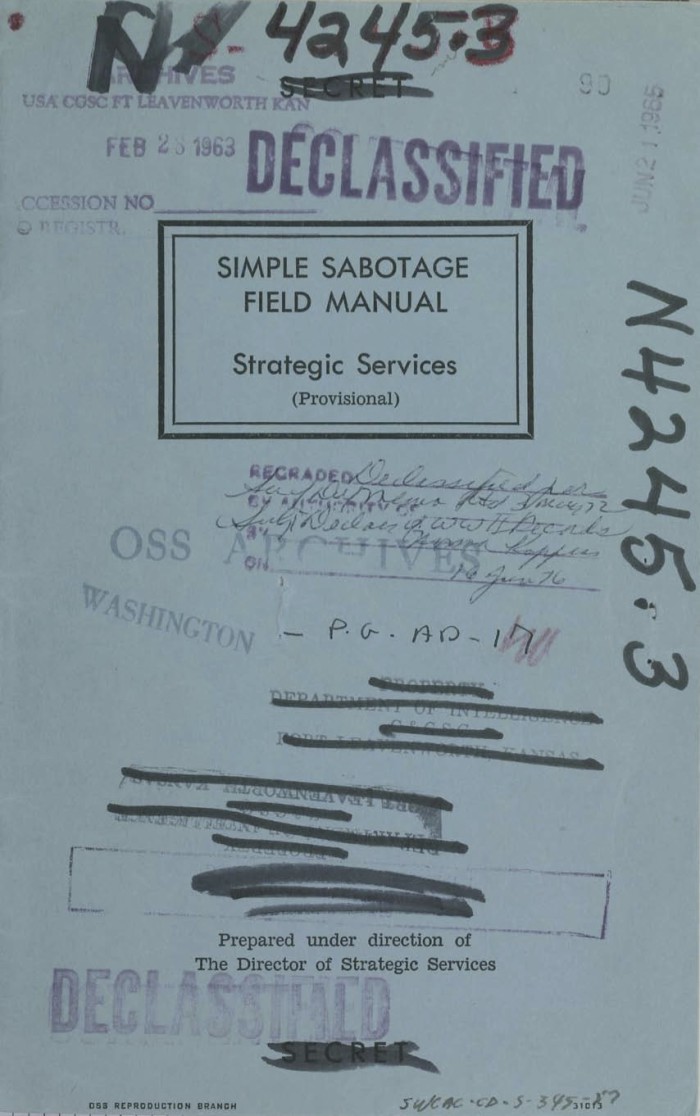
I recently read the Simple Sabotage Field Manual which was a World War II publication of the United States Office of Strategic Services. This publication is now open source and is unfortunately very relevant to our modern times. Maybe you need to slow down or interfere with undesired or unethical decisions at your work or in your government? If so, this book tells you how to do so with the least risk to yourself. One example is to insist that instructions must be issued formally and in writing before being acted on. It’s the little things…

 
Finished Watching Over Her by JB Andrea - originally published in France in 2023 and a Goncourt prize winner - finally tbp in English this summer; one of the books I have been waiting for with huge expectations, the book was excellent and almost delivered on those huge expectations. My Goodreads review below:

A prize-winning novel I have been looking forward to for a few years now, Watching Over Her almost delivers on the hype and expectations - Michelangelo (Mimo) Vitaliani, a sculptor of genius, a dwarf from a poor family and the creator of a controversial religious sculpture that the Vatican has been hiding in the basement of a monastery where he has been living for some decades - not as a recluse monk though, but more like a refugee from life - now dying aged 82, reflects on his life and his relationship with aristocratic strong-willed Viola Orsini who was a polymath genius - or at least could have been if she were a man or maybe in more modern times - and tried to overcome the obstacles that society imposed to a woman of her status.

Interspersed in the narration, the monastery abbot reflects on Mimo and his work - especially his last controversial masterpiece - both from a personal point of view and from the extensive (secret) dossier compiled by the Vatican as well as the monographs and articles dedicated to Mimo and the work.

Born in France in 1904 of Italian descent, Mimo is sent to Italy in 1916 by his war-widowed mother to apprentice with a family acquaintance whose studio is in a village on a plateau north of Genoa near the Orsini estate - the Orsini family and the local church being his main customers. Meeting Viola by chance when they were both 12, their friendship grows strong in secret at first, but when - despite the jealousy of his nominal master who signs Mimo's work as his own and tries to impede his development in various ways, though of course needing him for his studio production, his artistic genius is recognized by one of Viola's brothers destined to be a priest and who wants to become a Vatican high flyer, so Mimo is eventually promoted to an honorary Orsini and becomes entangled with their destiny for life.

And so it goes with energy, wit, and lots of emotion with both Mimo and Viola extraordinary larger-than-life characters in a turbulent era. The one thing that makes me say almost above, is that the book feels ultimately somewhat incomplete and unbalanced - covering essentially the 30 years of Mimo's career from 1916 to 1946 when he sculpts his last work and retreats to the monastery, the early years take a lot of book space but feel less consequential than the later years in which many things happen quite often too fast.

Overall an excellent novel well deserving of its accolades and highly recommended though a bit short of the masterpiece for the ages that it could have been with a better balance.
 
Finished Yeshua: The Young Jesus of Nazareth by P Jaksa, first in a trilogy about Jesus and the early Church - independently published (KU) from the author of the excellent Decebalus trilogy and it was very good - the only downside is that the promised sequels are not out yet.

The blurb:

The Young Jesus of Nazareth tells the story of the early years (3—28 C.E.) in the life of Jesus. We follow his growth through childhood, family life before and after the death of Joseph, teen years, and young adulthood as the head of his family. Later chapters cover meeting John the Baptizer, and the beginning stages of his ministry in Capernaum. The novel brings history to life — people, culture, religion, and events of Jesus’ time — based on historical studies, ancient pre-gospel writings of the early Christian church, and recent religious literature.
This book offers new insights to understand the person called Yeshua and those closest to his parents, four brothers, two sisters, relatives from the families of Clopas and Zebedee, and his fellow Nazarenes. In the fishing village of Capernaum, the mature Yeshua assembles a group of disciples and supporters. Key among them are the twelve apostles, and also many influential women, including Mary Magdalene and Joanna. This novel portrays their lives with candor, respect, and affection
.
 
  • Like
Reactions: Raf
I have been reading a lot of two detective series lately. They are each based in Los Angeles, but have extremely different perspectives.
Walter Mosely (Easy Rawlins) writes from an aggressively Black perspective. His lead lives in a racist environment where driving down the street in a white neighborhood or in a seemingly inappropriate (good condition) vehicule occasions being pulled over, interrogated, usually with brutality, and almost always with scorn and disbelief. With perhaps 3-4 exceptions where they need Easy Rawlins' help LA cops exercise their authority without any professionalism or non-racist behavior. Most whites operate similarly, with distrust and stereotypical racism, just not the overt violence. Exceptions to this rule are counter cultural persons (usually called "Hippies") and persons, mostly recent European immigrants, who have experienced discrimination or oppression in their own lives and crooks who are color blind to racial differences - to their own advantage,
Black and Latino characters understand racism and mostly go along with it to survive. It is notable that the character Rawlins does see some possibility for change and that the dozen or so books that I have read are placed in the 50s-70s. Black and Brown characters in the books are often admirable in their abilities when they have not been beaten down by poverty or have become crooks as vicious as any of the White criminals . All of this is background for procedurals that are interesting in their own right, with Rawlins and friends sorting out crimes and puzzles, sometimes for pay as a PI, but often because he decides to help victims.

Michael Connelly (Bosch) puts his lead, a very hard nosed but often brilliant detective in a world where sadists and criminals hurt, kill, or rob mostly innocent victims. He is their defender or avenger. As with Rawlins the books are investigative procedurals that test the powers and great experience that the lead has decoding the crimes and dealing with both criminals and the general public. In some books Bosch is an LA detective and in some a retired cop morphed into a mostly retired PI. Of note is that many of the cops are non-white and are on average more capable and honest than the prime White cop characters, But while race is mentioned it is not the point with either victims or co-workers. Here all cops are fallible, even Bosch in his assumptions. Like Easy Rawlins legalities are dispensable if they get in the way of justice.
Both leads love women and their own kid(s). Sex is somewhat more graphic in the Mosely but used to characterize not titillate.

A common feature to the books is portraying characters as absolutes. Bosch comes up against at least three different murderers who have record number of victims (his daughter who becomes a cop, encounters a fourth). Rawlins meets and often allies with characters who are fierce and able to use violence at an almost unprecedented level. Mosely does have the consistency to muse on one occasion as to what would happen if two fought each other. His lead also has a habit of meeting women of surpassing beauty.
The frequency with which each author uses these absolutes is generally only a problem when you read piles of books by the authors over a short period.
Both are recommended for leisure reading, if you can get though lots of graphic violence.
 
Last edited:
37296.jpg


I finished Night Prey by John Sandford. This is Lucas Davenport #6. Somehow I skipped this one and read 7 and 8. Well, I'm glad I went back to scoop this one up. It's a really good story, and it seems Davenport is coming into his own here.
 
81rW8rl6v6L._SL1500_.jpg


In my search for something different, I stumbled onto this. Butcher & Blackbird: The Ruinous Love Trilogy by Brynne Weaver. In this world, there are, apparently, multiple serial killers spread across the USA. In amongst those maniacs are a special breed of serial killers who hunt the worst of their brethren.

Sloane Sutherland made a mistake and finds herself in a cage and staring at the body of a dead killer. Her best knife still in the neck of the rotting body. Only to be rescued by Rowan Kane. Another serial killer who was after her currently dead target as well. Also one of 3 brothers who all share the same predilection for good natured psychotic, murderous mayhem.

I'm not sure what thread this review belongs in. Fantasy or alt world scifi? But no magic and no tech to speak of leads to this thread. If there was a sub-thread for "What the Hell Did I Just Read?"...it would go there too.

Grimdark to the extreme, but kind of cute, too in the budding relationship between Rowan & Sloane. Alternating POV's between the MC's makes it interesting as our lovelorn couple navigates the slippery slope of shared maniacal murderousness with the real world date scene. Add in a LOT of gratuitous and explicit sex scenes and I suppose you have a formula for the Kindle Roman-tasies I've been reading about.

Kind of disturbing too that this kind of material is available for all. But that is probably just my old fashioned curmudgeon-ness speaking there.

Can't believe I actually paid for this one, lol.

On to something else.
 
216131.jpg


I finished Secret Prey by Sandford. This is Lucas Davenport #9. I was another solid entry into the series. Recommended.
 
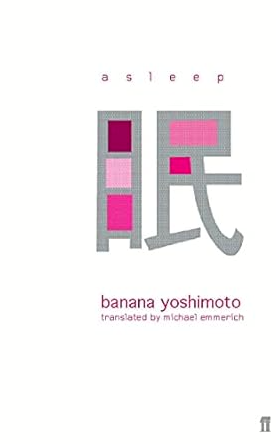
I'm reading Asleep, a small collection of 3 (possibly linked) novellas by one of my favourite authors, Banana Yoshimoto.

Screenshot-2025-04-24-at-09-22-32.png
 
61hCF+rDz1L._SY425_.jpg


Picked up a mega-pack of short stories and novellas by Harold Lamb. Lamb was an early pulp writer specializing in Cossack, Arab and Turkish based tales. His work inspired a lot of the later pulp writers. People like Robert E. Howard, Harry Harrison and Ben Bova.

He had a varied and really interesting writing career


I stumbled onto a mention of him in a reddit thread. Picked up this mega pack for $ 0.99 and decide to give it a try. Most of these stories were written during the years of 1917-1932. His most famous character in these stories is Khlit the Wolf. An aged Cossack warrior who quit the Cossack armies in the Ukraine. The
Cossack culture forces aging warriors into monasteries to live out their dotage.

Defying the leaders forced retirement, Khlit heads out to further adventures across Asia. Given the era of writing, the style is somewhat stilted and old fashioned. But I love the characters and Khlit has become a favorite as well.

Grumpy curmudgeonly grandfather...and warrior extraordinaire. Good stuff.
 
Can't really add this to fantasy/horror section. Anyway, I finally read Shirley Jackson's The Lottery; or The Adventures of James Harris beginning to end. My GoodReads review:

Shirley Jackson was a master of domestic anxiety, and of big city or small town dread, not of monsters, but of neighbors and friends and family and, sometimes, yourself. A running thread throughout the collection is the presence of or reference to James Harris as Jim or James or Jamie or Mr. Harris; even at times as Miss or Mrs. Harris. James Harris derives from the Child Ballads (no. 243; quoted in the epilogue), a sailor back from the sea to find his former lover married and a mother, and convinces her to sail away with him, only to reveal himself as a "demon lover" wafting her away to Hell. Only "The Lottery" here can be described accurately as a horror story, but all of the stories in this collection share a feeling that the women depicted, even when surrounded by friends and family, are alone and undefended, prey for the various incarnations of James Harris.

If you're interested in the anxieties of mid-20th century America, some of which are still relevant, this is the collection for you.


I mentioned this to the GoodReads group I was reading it with (please pardon the repetition),

Kind of tangential, and I’m not really sure how well I could defend these really broad strokes …

David Hartwell included a Jackson story (“The Summer People”) in The Dark Descent. His introduction to the story mentions that Jackson told him she owned a complete run of the 1940's pulp, Unknown. I think Unknown paved the way for later magazines like The Magazine of Fantasy and Science Fiction among others where writers like Richard Matheson and Charles Beaumont were published in the '50s. They would have been near contemporaries of Jackson and, I think, some of Jackson's concerns overlap those of Matheson and Beaumont, perhaps mainly in the examination of suburban pressures as the population shifted location post-WWII. Three things make her stories distinctive from theirs, first, she was the better, more subtle stylist (which is not meant as a put-down of Matheson or Beaumont); second, as a woman and mother, her perspective shifted toward the domestic; and third, she didn’t exactly write genre fiction, but a fair amount of her fiction could be called Gothic, and most (if not all) genre fiction descends from Gothic literature. Many earlier women writers disguised their domestic concerns in ghost stories that would be palatable to a broad readership; Jackson couched hers in The New Yorker style stories that approached genre; in either case those stories could create a fair amount of anxiety in the reader.

Like I said, I’m not sure I could defend this line of reasoning, but when I read Jackson, Matheson or Beaumont, I get much the same feeling of mid-century American anxiety. Hers is just flavored differently, with close attention to domestic detail.
 
Five T'ANG Poets. Translated and introduced by David Young.
I make no claims to any knowledge or special appreciation of literary culture and certainly not poetry. This book was brought home from the library by my spouse of 55 years who has been both a published poet and along with reading other books of Buddhist and Chinese Poetry has exhibited an appreciation that for this uncultured boob is remarkable.
But the book got me hooked for short exploration before sleep.
The five poets excerpted are Wang Wei. Li Po. Tu Fu, Li Ho and Li Shang-Yin. There is much that is lost in translation. Allusions to myth and history are lost to the non-Chinese reader. As is noted by the editor and influences his short (182) page collection selections.
The T'ang period was from 618 to 917 AD.

by Tu-Fu
Tonight
in this same moonlight
my wife is alone at her window

I can hardly bear to think of my children
too young to understand
why I can't come to them

her hair must be damp from the mist
her arms cold jade in the moonlight

when will we stand together
by those slack curtains
while the moonlight
dries the tear-streaked
on our faces?

Big Song
by Li Ho
The south wind
wears the mountain down
making plains

it's ordained
that the ocean god
will invade dry land
and leave the sea bed bare

when the Queen of Heaven's peachtrees
have flowered a thousand times
where will the men
of great longevity
and unrivalled wisdom
be?

Fighting South of the Ramparts.
verse 5, by Li Po
What have the generals accomplished?
what they know
is less than what we've learned-

a sword's a stinking thing
a wise man will use
as seldom as he can.
 
Last edited:
Re-reading James Michener's, "The Covenant". His South Africa tale / Opus. Read it back in the 80's when Michener was knocking out one opus after another. My Michener phase as it were :)

Couple of hundred pages in and I don't remember any of it. Guess I'm going to have re-read my other favorites of his. Chesapeake, Texas, Centennial, Poland, Alaska and The Source.
 
Discovered that Christian Cameron started a new series with The Venetian Heretic (spring 2025) featuring an English fencing master in Venice 1651; a bit different than the usual since it has mostly intrigue, fights, politics with only a little war at sea. Also with a little of a Holmes pastiche thrown in and a superb ending. Top 5-10 for the year. My longer Goodreads review below:

Excellent start to a new series - set in Venice in 1651 during the long war for Crete against the Ottomans - the novel is a first person narration from Richard Hughes, once a Cambridge student who took arms for King Charles, lost everything and fled into exile in Europe where he fought as mercenary in the Thirty Year War, was sent to the galleys by the French, captured by the Turks, rescued by Venetians for whom he fought and was rewarded with citizenship and a modest existence as fencing master. Secretly he is also an occasional agent of the state police - mostly through his patron, the high noble Francesco Morosini - who appears as an AI avatar in the author's Arcana Imperii space opera series.

While preferring a peaceful existence, training his students and courting Maria, an inn owner, Richard is unwittingly drawn into intrigue and danger - he is arrested by the Inquisition on a pretext to actually do a job he cannot refuse for them, then saves a young noble Filippo from death at the hand of ruthless assassins only to have to take charge of him, while getting involved in the Culture wars of the time who can prove even more dangerous than the real ones. Filippo has quite a few secrets but a very agile mind and is part of what are called The Libertini, a diverse grouping of hedonists, anti Catholic militants, intellectuals, women with strong personalities who militate for more rights - the anti establishment set in a sense though they are led by Loredan a high ranking aristocrat and member of the ruling Council of Ten.

Unfortunately, a ruthless killer in a red mask is running around killing Libertini, putting explosives in theatres where the Libertini operas play, and possibly preparing for worse mischief that may even threaten the Republic.

And so it goes with a lot of action and intrigue, many colorful characters including an African bravo and a Cherokee basket maker, former oar mates of Richard whom he employs on occasion, the local gangsters, an Italian lady of many talents married with an exiled (and mostly penniless) English lord, a famous opera singer whom Richard accepts to train to defend herself, an Inquisition captain with a strong ethical sense, a Jewish fencing master whom Richard takes as a partner despite the usual prejudices of the time, a famed courtesan who also needs rescue...

There is also a bit of a Holmes Watson pastiche with Filippo the smart one who deduces things from small clues and Richard the action man...

And of course - the author being Christian Cameron - a little action at sea against the Turks when Richard has to play bodyguard to Morosini who is one of the commanders of the Venetian fleet

The storyline is concluded very well, though a new one is introduced as a sort of epilogue where we even get to meet French envoy Charles de Batz, better known as D'Artagnan...

Overall an excellent story, quite different than the usual military stuff for which the author is deservedly renowned so quite refreshing in many ways.

Highly recommended and The French Ambassador, the announced sequel became a hugely awaited novel as I really want to read more about Richard Hughes and Filippo di Chamberi adventures.
 
  • Like
Reactions: Raf
Discovered that Christian Cameron started a new series with The Venetian Heretic (spring 2025) featuring an English fencing master in Venice 1651; a bit different than the usual since it has mostly intrigue, fights, politics with only a little war at sea. Also with a little of a Holmes pastiche thrown in and a superb ending. Top 5-10 for the year. My longer Goodreads review below:

Excellent start to a new series - set in Venice in 1651 during the long war for Crete against the Ottomans - the novel is a first person narration from Richard Hughes, once a Cambridge student who took arms for King Charles, lost everything and fled into exile in Europe where he fought as mercenary in the Thirty Year War, was sent to the galleys by the French, captured by the Turks, rescued by Venetians for whom he fought and was rewarded with citizenship and a modest existence as fencing master. Secretly he is also an occasional agent of the state police - mostly through his patron, the high noble Francesco Morosini - who appears as an AI avatar in the author's Arcana Imperii space opera series.

While preferring a peaceful existence, training his students and courting Maria, an inn owner, Richard is unwittingly drawn into intrigue and danger - he is arrested by the Inquisition on a pretext to actually do a job he cannot refuse for them, then saves a young noble Filippo from death at the hand of ruthless assassins only to have to take charge of him, while getting involved in the Culture wars of the time who can prove even more dangerous than the real ones. Filippo has quite a few secrets but a very agile mind and is part of what are called The Libertini, a diverse grouping of hedonists, anti Catholic militants, intellectuals, women with strong personalities who militate for more rights - the anti establishment set in a sense though they are led by Loredan a high ranking aristocrat and member of the ruling Council of Ten.

Unfortunately, a ruthless killer in a red mask is running around killing Libertini, putting explosives in theatres where the Libertini operas play, and possibly preparing for worse mischief that may even threaten the Republic.

And so it goes with a lot of action and intrigue, many colorful characters including an African bravo and a Cherokee basket maker, former oar mates of Richard whom he employs on occasion, the local gangsters, an Italian lady of many talents married with an exiled (and mostly penniless) English lord, a famous opera singer whom Richard accepts to train to defend herself, an Inquisition captain with a strong ethical sense, a Jewish fencing master whom Richard takes as a partner despite the usual prejudices of the time, a famed courtesan who also needs rescue...

There is also a bit of a Holmes Watson pastiche with Filippo the smart one who deduces things from small clues and Richard the action man...

And of course - the author being Christian Cameron - a little action at sea against the Turks when Richard has to play bodyguard to Morosini who is one of the commanders of the Venetian fleet

The storyline is concluded very well, though a new one is introduced as a sort of epilogue where we even get to meet French envoy Charles de Batz, better known as D'Artagnan...

Overall an excellent story, quite different than the usual military stuff for which the author is deservedly renowned so quite refreshing in many ways.

Highly recommended and The French Ambassador, the announced sequel became a hugely awaited novel as I really want to read more about Richard Hughes and Filippo di Chamberi adventures.

Sounds like he took a lot of the Tom Swann short story ideas and combined them into a novel. Though the Swann stuff takes place in in the mid 1400's to the 1500's. I'll add this one to my TBR list.
 
Sounds like he took a lot of the Tom Swann short story ideas and combined them into a novel. Though the Swann stuff takes place in in the mid 1400's to the 1500's. I'll add this one to my TBR list.

It's a bit different - Tom Swan (read the first three cycles but not the last with the Keys of St Peter though plan to do that soon) was with lots of battles, the running of a mercenary company (kind like Chivalry) while this takes place pretty much only in Venice and technical stuff is more about fencing moves and a little about Venetian Opera. The only battle is a sea engagement where Morosini's part of the Venetian fleet achieves a major victory, while Richard is in the thick of the battle... The Holmes/Watson vibes are here and there and the next one promises to be a very detective investigation like at least to start with, while the D'Artagnan touch at the end was really cool so I expect he will feature too in the French Ambassador.

Liked this one a lot since it was a great change of topic from the other stuff - still haven't read the 6th Chivalry book either as at some point following a mercenary company around is the same.

Also Morosini and the cat though they do not appear that often, but the hero gets a cat hanging around too
 
Last edited:
2732977.jpg


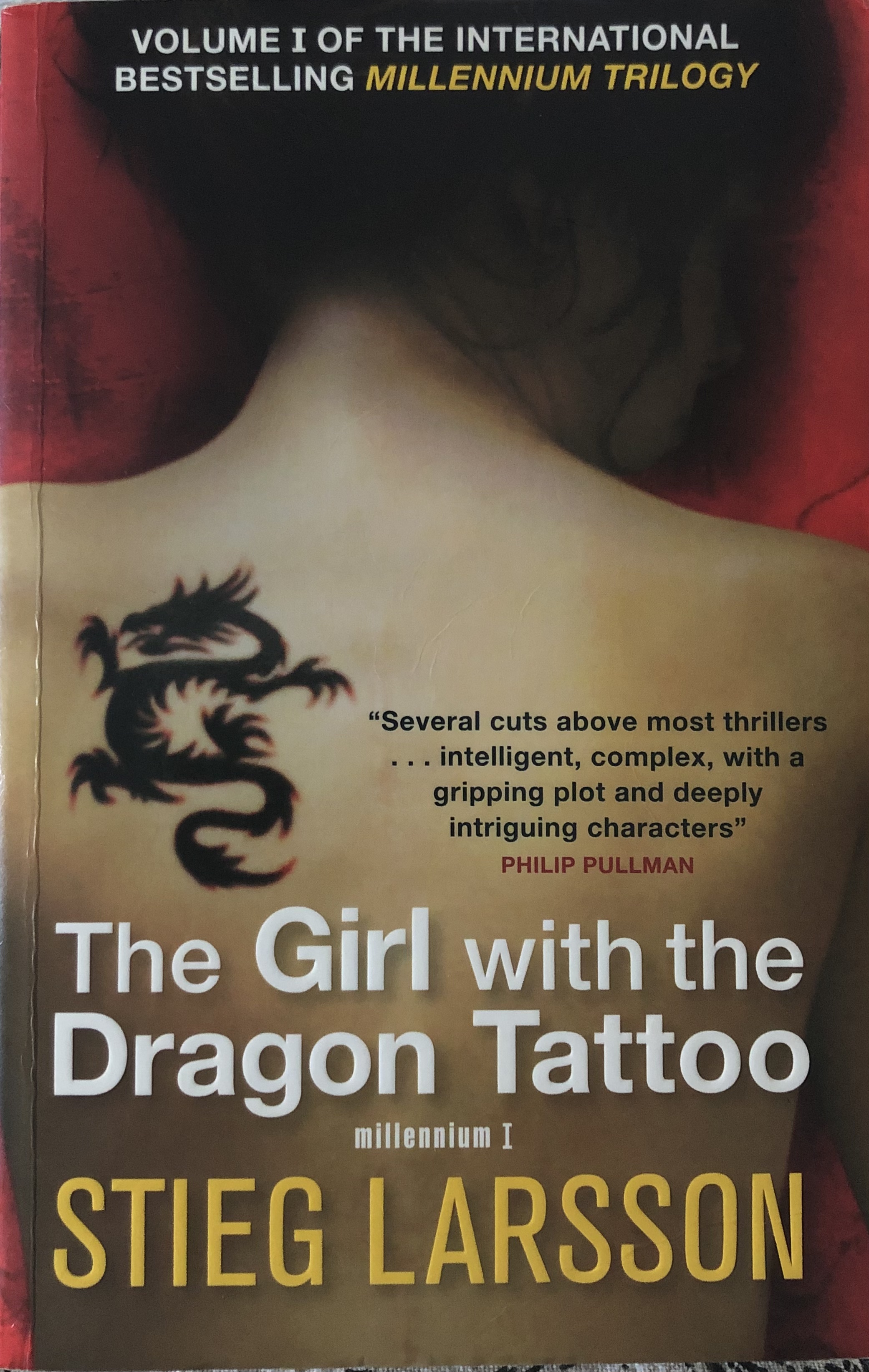
I finished a re-read of The Girl with the Dragon Tattoo - still a great read.

I loved the Swedish setting, for reason alone being something different to the usual. It's also a well-plotted locked room (well, island) murder mystery, with some interesting ways that main character Blomkvist uncovers clues. And of course there's the enigmatic "girl" herself, Lisbeth Salander, with all her personality issues, tragic background, but excellent research and memory skills - and the friendship she forms with Blomkvist.

I'd even forgotten who the killer was which made it more enjoyable, and it ends with unresolved differences between Blomkvist and Salander that will be unravelled in the next book.

The negatives? It did take a little bit to get started, and there were occaisions where it was a bit too verbose, but pretty minor overall. The accolades were well deserved.
 
Re-reading James Michener's, "The Covenant". His South Africa tale / Opus. Read it back in the 80's when Michener was knocking out one opus after another. My Michener phase as it were :)

Couple of hundred pages in and I don't remember any of it. Guess I'm going to have re-read my other favorites of his. Chesapeake, Texas, Centennial, Poland, Alaska and The Source.

I've read almost everything James Michener has ever written. Everything up to "Caribbean" anyway. He dropped off my reading window somewhere around the 1990's. I was hoping to re-experience that ol' magic with this re-read of "The Covenant".

49% into a 1200 page read and I'm just not feeling it. At least not in the way I did in 1980. I guess things just change over time. I'm going to set this one aside...for now anyway.
 
Last edited:
Listened to Devil's Kitchen by Stephen Puleston, a prequel novella of a series I've been considering reading - the Inspector Drake books. There's really only one reason it came on my radar - it's set where I grew up and live in North Wales. I liked the sound of this though was unsure a detective series set here would work, but the novella kept my interest enough for me to try some more.
 
Last edited:
SHAKE IT UP BABY ( 1963 and the rise of Beatlemania )

AND IN THE END ( the last days of The Beatles )

Both beautifully written by Ken McNab .

A review of 1963's relentless touring and recording schedule masterminded by Epstein and Martin does little to diminish the innocence , excitement and camaraderie , as The Beatles conquer Britain .

The second book gives a monthly appraisal of the band breaking up during 1969 . I hadn't realised they were in such a mess . Egos , money , mental exhaustion , back stabbing , rip offs , Yoko Ono , all playing a part in the disintegration .


Reading the books back to back really reinforces the contrast for The Beatles in the space of 6 years .
 

Sponsors


We try to keep the forum as free of ads as possible, please consider supporting SFFWorld on Patreon


Your ad here.
Back
Top